Intervertebral Disc
The unsung heroes cushioning your spine's every twist and turn! 🤸♀️
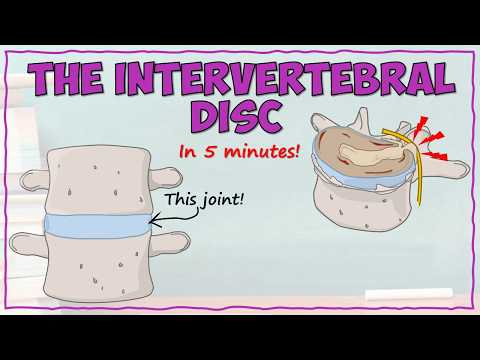
Intervertebral Disc
🪷 THE ESSENCE
✨The [intervertebral disc](intervertebral-disc) is a crucial, jelly-filled cushion nestled between your vertebrae, acting as a shock absorber and enabling spinal flexibility. Understanding these vital structures is key to appreciating spinal health and identifying the source of many back woes. 💡
§1Overview: The Spinal Shock Absorber [ANATOMY] [STRONG EVIDENCE]
Imagine your spine as a stack of bony blocks—your vertebrae. Now, picture a squishy, resilient cushion placed between each block. That's essentially what an intervertebral disc is! These remarkable structures are far more than simple spacers; they are dynamic shock absorbers, allowing your spine to bend, twist, and flex without grinding bone-on-bone. Without them, every jump, run, or even a simple walk would send jarring impacts directly to your spinal cord and brain. They are fundamental to both the stability and mobility of your vertebral column, making them indispensable for everyday movement. 🚶♀️
§2Anatomy & Function: A Two-Part Harmony [ANATOMY] [STRONG EVIDENCE]
Each intervertebral disc is a marvel of biological engineering, composed of two main parts working in perfect harmony. First, there's the outer ring, called the annulus fibrosus. This tough, fibrous layer is made of concentric rings of collagen, much like an onion, providing strength and containing the inner core. Think of it as the sturdy wall of a tire. Inside this wall lies the nucleus pulposus, a gel-like, highly hydrated substance rich in proteoglycans. This inner core is like the jelly in a donut, providing the disc's elasticity and ability to distribute pressure evenly across the vertebral endplates. Together, these components allow the disc to withstand immense compressive forces while maintaining flexibility, protecting the delicate nerve roots exiting the spinal canal. 🦴
§3Common Disc Issues: When Cushions Get Cranky [CONDITION] [STRONG EVIDENCE]
While incredibly resilient, intervertebral discs are not invincible. Over time, due to aging, injury, or repetitive stress, they can degenerate. One of the most common issues is a herniated disc (often called a 'slipped disc,' though it doesn't actually slip out of place). This occurs when the nucleus pulposus pushes through a tear in the annulus fibrosus, potentially compressing nearby spinal nerves. Another frequent problem is degenerative disc disease, a natural process where discs lose hydration and elasticity, leading to reduced cushioning and height. This can contribute to conditions like spinal stenosis or spondylolisthesis. These conditions can manifest as back pain, radiculopathy, or sciatica. 😫
§4Maintaining Disc Health: Your Spine's Best Friend [LIFESTYLE] [STRONG EVIDENCE]
Good news! You can play a significant role in keeping your intervertebral discs happy and healthy. Regular, low-impact exercise is paramount, as movement helps circulate nutrients to the discs (which have a poor blood supply). Activities like swimming, walking, and yoga are excellent. Maintaining a healthy body weight reduces stress on your spine, and practicing proper posture (especially when sitting or lifting) prevents undue strain. Staying hydrated is also crucial, as the nucleus pulposus is largely water. Incorporating core strengthening exercises can provide vital support, helping to stabilize the lumbar spine and cervical spine. Think of it as giving your spinal cushions a daily dose of TLC! 💪
§5When to See a Doctor: Red Flag Symptoms [SYMPTOM] [NEEDS CAUTION]
While many instances of back pain resolve on their own, certain symptoms warrant immediate medical attention. If you experience sudden, severe pain that doesn't improve, especially after an injury, it's time to consult a healthcare professional. Other red flags include: 🚩
- Numbness, weakness, or tingling in your arms or legs.
- Loss of bowel or bladder control (a rare but serious sign of cauda equina syndrome).
- Pain that radiates down one or both legs (suggestive of sciatica or radiculopathy).
- Unexplained weight loss or fever accompanying back pain.
- Pain that worsens at night or interferes with sleep.
Early diagnosis and appropriate treatment for disc-related issues can prevent long-term complications. Your doctor may recommend imaging studies like an MRI to assess disc health. 🩺
Medical Guidance Required
This information is for educational purposes only. Spine conditions can be serious — always consult a qualified spine specialist, orthopedic surgeon, or physiatrist before starting any treatment, exercise program, or making health decisions.
Sources & References
5Intervertebral disc - Wikipedia
Provides a comprehensive overview of the intervertebral disc's anatomy, function, and common pathologies.
Intervertebral Disc - StatPearls
An academic medical article from StatPearls, offering detailed anatomical and physiological information on the intervertebral disc.
Herniated Disk - Mayo Clinic
An official patient-focused resource from Mayo Clinic explaining herniated discs, a common condition affecting intervertebral discs.
Degenerative Disc Disease - American Academy of Orthopaedic Surgeons (AAOS)
An authoritative resource from a professional medical organization detailing degenerative disc disease, another prevalent disc issue.
Anatomy of the Spine and Back - University of Maryland Medical Center
A university medical center resource providing foundational information on the anatomy of the spine, including intervertebral discs.
Sources are AI-identified references. Always verify information with primary sources.